Skip to content
Johnny Opinion Press

Labs · Market analysis

The AI boom is a $700B order book.

Follow the cheque from cloud buyers into chips, memory, packaging, power, cooling, fibre and copper.

~$700B 2026 capex pool $67 compute per Microsoft $100 $33 sites and infrastructure

Sources stamped by date.

Evidence descent

Scroll the order book before the stock chart.

Each stop asks one plain question: when the next AI dollar moves down the chain, does it pass through cleanly, or does a bottleneck get to charge a toll?

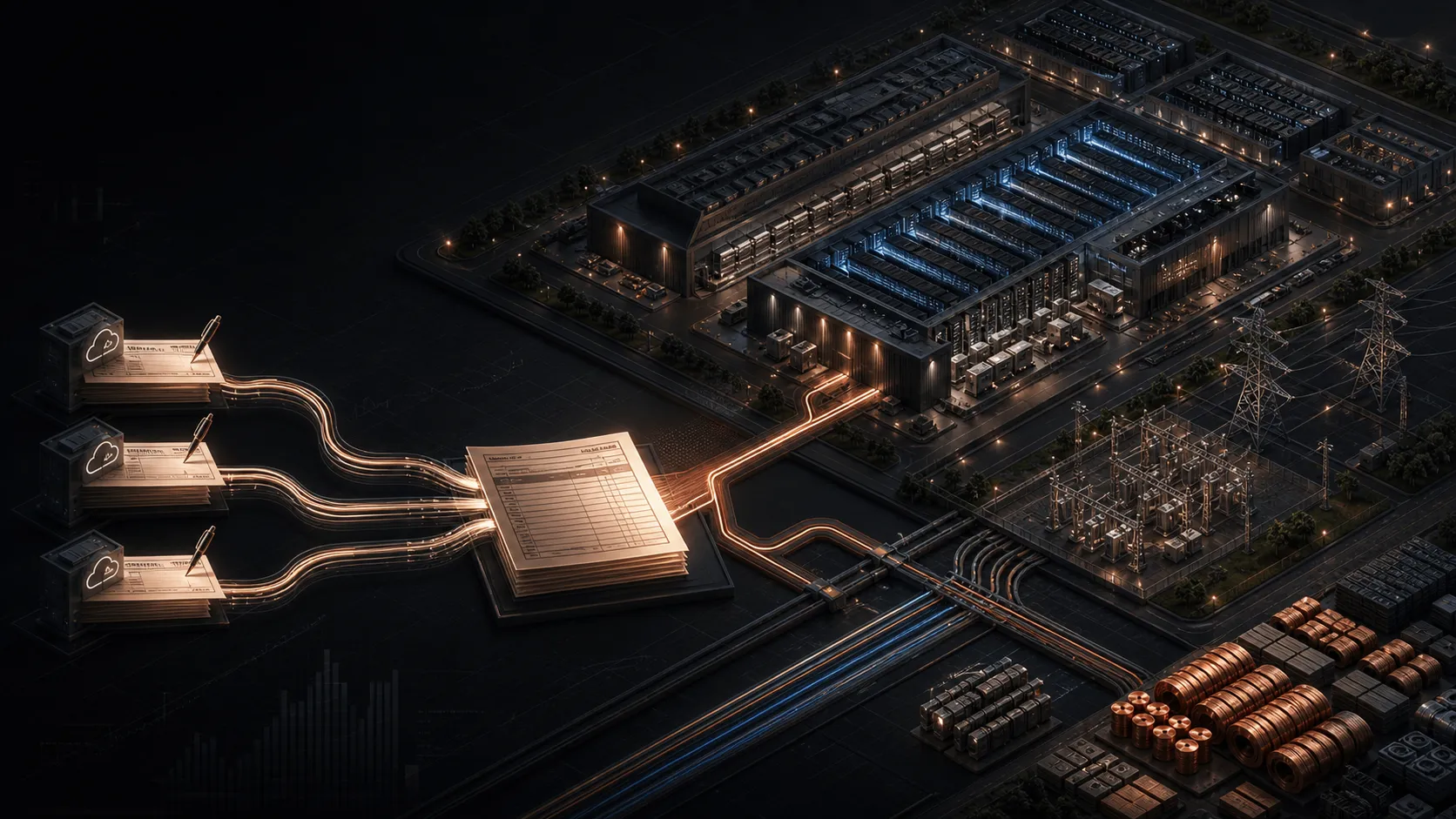
Isometric data-center campus connected to power pylons and a copper trace.

01 / Demand

Follow the $100 cheque.

AI demand / cloud-giant capex

Amazon, Microsoft, Alphabet and Meta turn AI belief into real orders: chips first, then sites, power, cooling, fibre and copper.

Follow the money Start with the cheque.

2026 cloud-giant capex pool: roughly $700B.

Microsoft's split: about $67 to compute, about $33 to sites and infrastructure.

Campus cheque $100
GPUs / CPUs ~$67
Sites / power ~$33
Next split HBM, packaging, cooling, fibre, copper

Which supplier keeps the fattest margin?

Market map

  • AmazonAMZN ~$200B planned capex Cloud giant AWS demand -> chips, buildings, fibre, power.
  • MicrosoftMSFT $31.9B Q3 capex Cloud giant $100 split: compute first, sites behind it.
  • AlphabetGOOGL $180-190B 2026 capex guide Cloud giant Backlog -> compute, networking, power.
  • MetaMETA $125-145B 2026 capex guide AI campus buyer Model ambition -> GPU campuses.

Valuation lens

Buyer economics before chip multiple

The cloud giants are valued on revenue growth, margins and free cash flow after depreciation. The construction bill is the order book for suppliers below them.

Compare capex with backlog, utilisation and operating cash flow. The spend is visible; the return is the argument.

Lazard Asset Management · May 2026

Priced-in test

partly priced Medium

The market sees the buyers. The edge is tracing the spend into the less glamorous bottleneck that clips the next margin.

Counterpoint: If AI usage or pricing disappoints, this demand pool is the kill switch for every downstream winner.

Convequity · Apr 2026
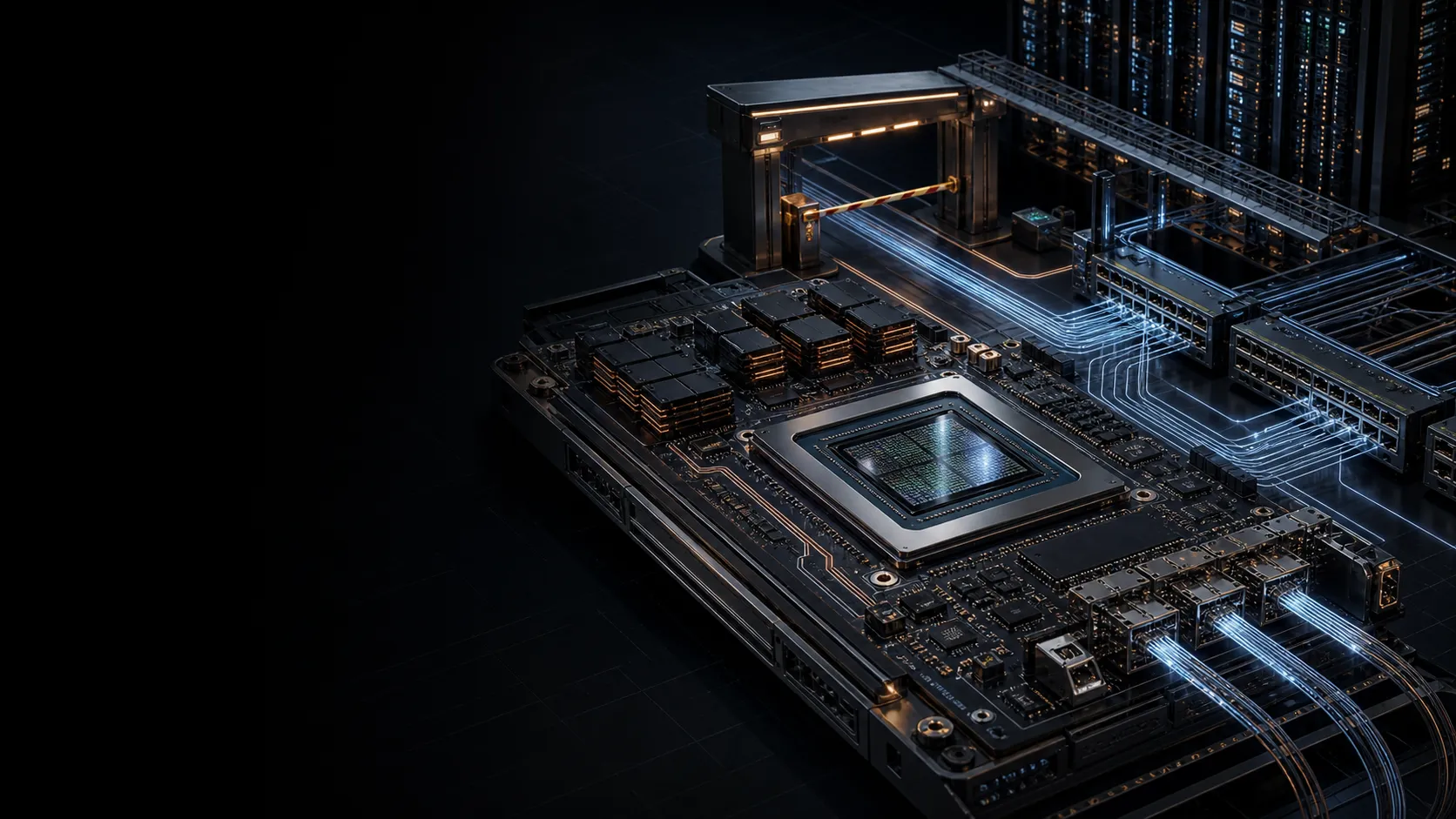
Isometric accelerator board with compute die, memory stacks and copper interconnect traces.

02 / Accelerator

The obvious tollbooth is already expensive.

GPU, HBM and networking

Nvidia is the visible tollbooth. The test is whether its platform toll keeps widening faster than the premium already in the stock.

Follow the money The campus cheque first becomes accelerator, memory and networking orders.

Nvidia’s data-centre revenue of $75.2B in one quarter is already a giant slice of the annual AI-buildout pool before AMD, Broadcom, HBM and server integrators are counted.

This is the first tollbooth: GPUs do the compute, HBM feeds them, and networking turns them into a cluster.

Nvidia data center $75.2B Q1 FY27
Compute inside DC $60.4B
Networking inside DC $14.8B

If the first tollbooth is obvious, where is the less obvious gate behind it?

Market map

  • NvidiaNVDA $75.2B DC revenue quarter Accelerator platform Primary tollbooth: captures GPU, networking and platform margin.
  • AMDAMD Challenger, smaller base GPU challenger Second-source pressure: matters if buyers diversify from Nvidia.
  • BroadcomAVGO Custom ASIC/networking exposure Custom silicon / networking Cloud-giant internal silicon path: captures value when buyers design their own chips.
  • SK Hynix000660.KS ~53-62% HBM share HBM supplier Memory ceiling: lets the accelerator run at useful bandwidth.

Valuation lens

Can the toll grow faster than the premium?

Nvidia is already valued as the AI platform tollbooth. The remaining debate is attach-rate, duration and how much platform margin the market has missed.

Compare data-centre revenue, networking attach and gross margin against the premium valuation.

CompaniesMarketCap · Jun 2026

Priced-in test

priced High

The dominance is real, but everyone can see it. This is the least hidden layer.

Counterpoint: The system-level platform and networking attach rate may still be underestimated if AI clusters keep scaling.

CompaniesMarketCap · Jun 2026
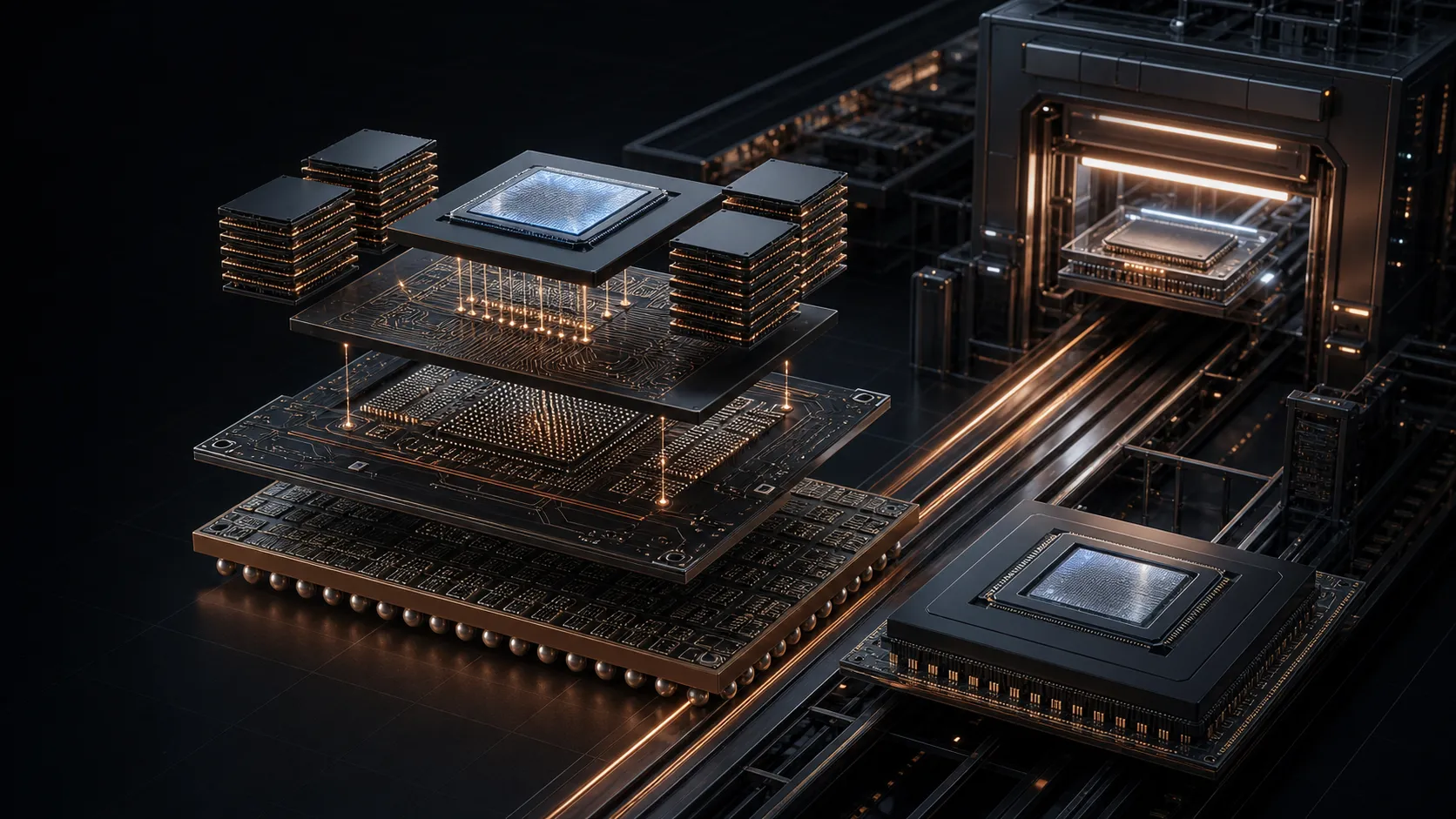
Accelerator package and memory stacks connected by dense copper traces.

03 / Package

Packaging turns silicon into shipments.

Advanced packaging, HBM attach and substrates

The hidden gate is packaging: logic dies, memory stacks and substrates must be assembled before cloud buyers receive usable accelerators.

Follow the money Accelerator demand ships after dies, HBM stacks and substrates become one module.

CoWoS capacity nearly doubled from roughly 40k to 75k wafers a month, yet HBM still sits with three main suppliers led by SK Hynix.

The GPU order turns into a package order: TSMC packaging, HBM and substrates decide how much demand becomes delivered supply.

CoWoS 2024 ~40k wafers/month
CoWoS 2025 ~75k wafers/month
SK Hynix HBM ~53-62% share
Micron HBM ~21% share
Samsung HBM ~17-22% share

Is the market valuing the package gate, or only the logo on top?

Market map

  • TSMCTSM ~75k CoWoS wafers/month estimate CoWoS capacity Packaging gate: converts GPU demand into shippable modules.
  • SK Hynix000660.KS ~53-62% HBM share HBM supplier Largest HBM gate: captures memory scarcity.
  • MicronMU ~21% HBM share estimate HBM supplier Share gainer: alternative HBM capacity.
  • Samsung005930.KS ~17-22% HBM share estimate HBM supplier Third HBM source plus foundry/package option.

Valuation lens

Capacity gate over brand halo

TSMC and the HBM makers already carry AI attention; the question is whether packaging and HBM scarcity last longer than shipment forecasts assume.

Compare CoWoS/HBM capacity ramps with accelerator delivery expectations.

CompaniesMarketCap · Jun 2026

Priced-in test

open question Medium

This layer can cap shipped supply even when GPU demand is obvious.

Counterpoint: Capacity is ramping, utilisation can ease, and much of the exposure is embedded inside already-watched TSMC/SK Hynix.

Fusion Worldwide · 2025
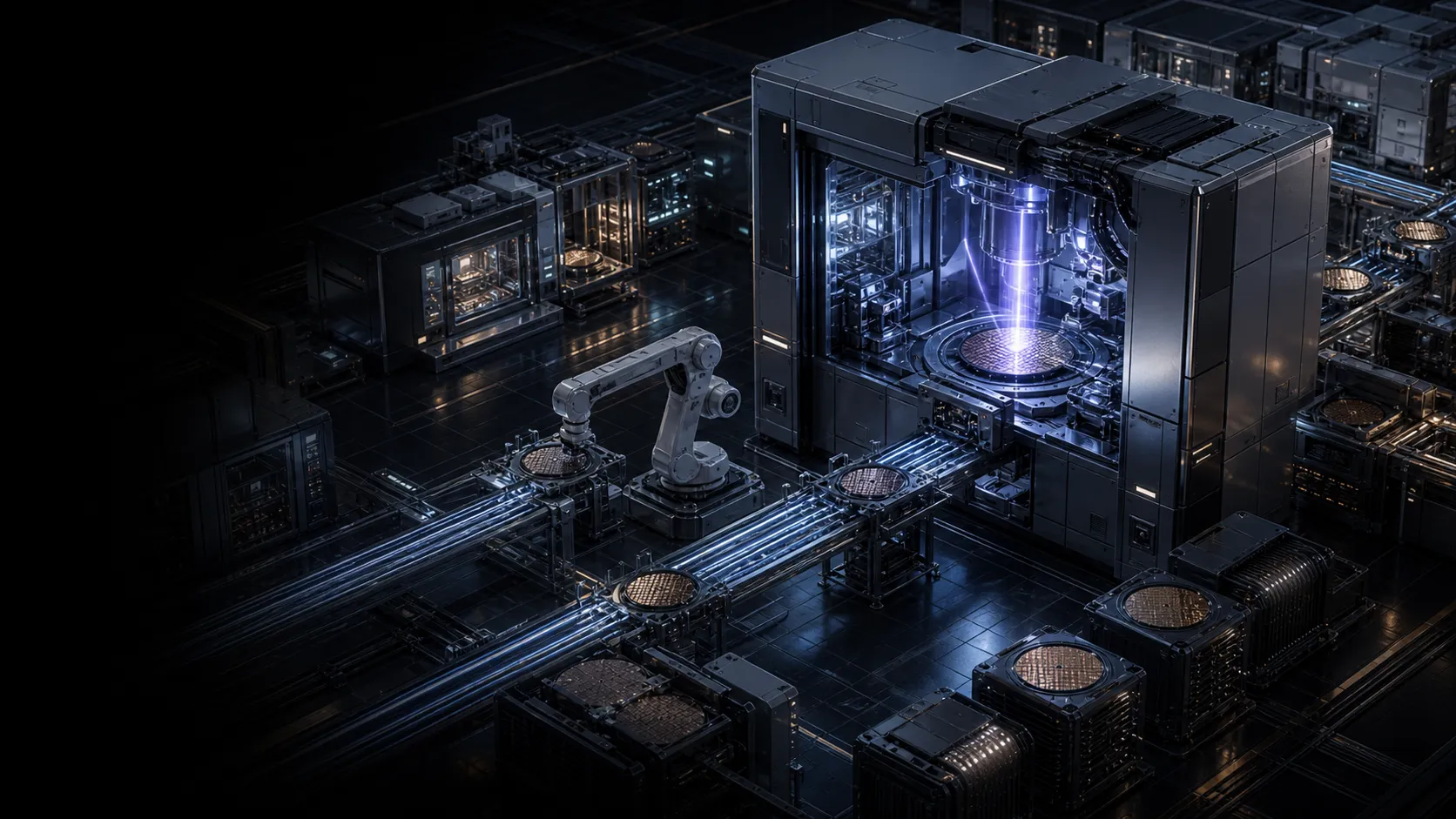
Isometric cleanroom with wafer, lithography machine and chip package stack.

04 / Foundry

Known monopolies need a duration edge.

Foundry, lithography and equipment

TSMC and ASML are true chokepoints with visible market recognition. The edge has to be duration, geopolitics or a wrong cycle view.

Follow the money Packaged accelerators start as leading-edge wafers printed by scarce tools.

TSMC is near 70% of foundry by share, while ASML is effectively 100% of EUV lithography; those are abnormal supplier markets.

The order reaches back into wafer starts: TSMC captures manufacturing economics and ASML captures the tool monopoly.

ASML EUV sole supplier
TSMC foundry ~69.9% share
ASML gross margin 52.8% FY2025
ASML sales guide EUR34-39B 2026

When the monopoly is obvious, how long does the market model the advantage?

Market map

  • TSMCTSM ~69.9% foundry share Leading-edge foundry Manufacturing gate: advanced wafer economics concentrate here.
  • ASMLASML Sole EUV supplier Lithography equipment Tool monopoly: no EUV scanner, no leading-edge wafer.
  • Samsung Foundry005930.KS Strategic second source Foundry challenger Competitive option: reduces single-supplier dependence but trails at leading edge.
  • Applied MaterialsAMAT Broad WFE exposure Process equipment Equipment basket: benefits when fabs add capacity beyond lithography.

Valuation lens

Known monopoly, duration test

ASML and TSMC already trade as strategic chokepoints. The test is whether AI extends the cycle longer than investors model.

Measure ASML by backlog duration and export-control risk, because the monopoly itself is already visible.

CompaniesMarketCap · Jun 2026

Priced-in test

open question Medium

The moat is visible; the underpriced part, if any, is duration or geopolitical tail risk.

Counterpoint: A rich multiple, export controls and capex cyclicality can already price much of the story.

CompaniesMarketCap · Jun 2026
Cleanroom material trays, wafer and lithography optics in an isometric technical scene.

05 / Materials

Boring inputs can halt famous chips.

Wafers, photoresist, quartz, neon and specialty inputs

Wafers, photoresist, quartz and gases are small markets with large consequences. The hard part is separating true chokepoints from obscure trivia.

Follow the money Fabs still need wafers, resists, quartz crucibles and specialty gases.

This layer is a failure map: Japan around 80% of photoresist, Shin-Etsu/SUMCO around half of wafers, and Spruce Pine often cited near 80% of crucible-grade quartz.

A small materials market can hold up a much larger chip market when qualification is slow or supply breaks.

Photoresist Japan ~80% market
Spruce Pine HPQ ~80% cited share
Shin-Etsu + SUMCO ~50% wafers
Ukraine neon baseline ~50% in 2022

Which inputs are true chokepoints, and which are just obscure but replaceable?

Market map

  • Shin-Etsu4063.T ~29% wafer share cited Wafers / chemicals Wafer/material gate: upstream input to every fab run.
  • SUMCO3436.T ~22% wafer share cited Silicon wafers Second wafer pillar: confirms meaningful concentration with room for other suppliers.
  • Tokyo Ohka Kogyo4186.T Japan photoresist leader Photoresist Patterning material: small input, high consequence.
  • Sibelco / The Quartz Corp Spruce Pine HPQ exposure High-purity quartz Crucible input: bottleneck sits in one district below the famous chip tickers.

Valuation lens

Chokepoint first, ticker second

Many exposures sit inside Japanese chemical groups or private operators, limiting clean public stock expression.

Compare concentration, substitutability and time-to-qualify new supply.

TrendForce · Nov 2025

Priced-in test

open question Medium

The fragility is under-watched, especially quartz, neon and photoresist. Public equity exposure remains indirect.

Counterpoint: Past shocks already caused diversification, and many exposures sit inside broader companies.

Construction Physics · 2024
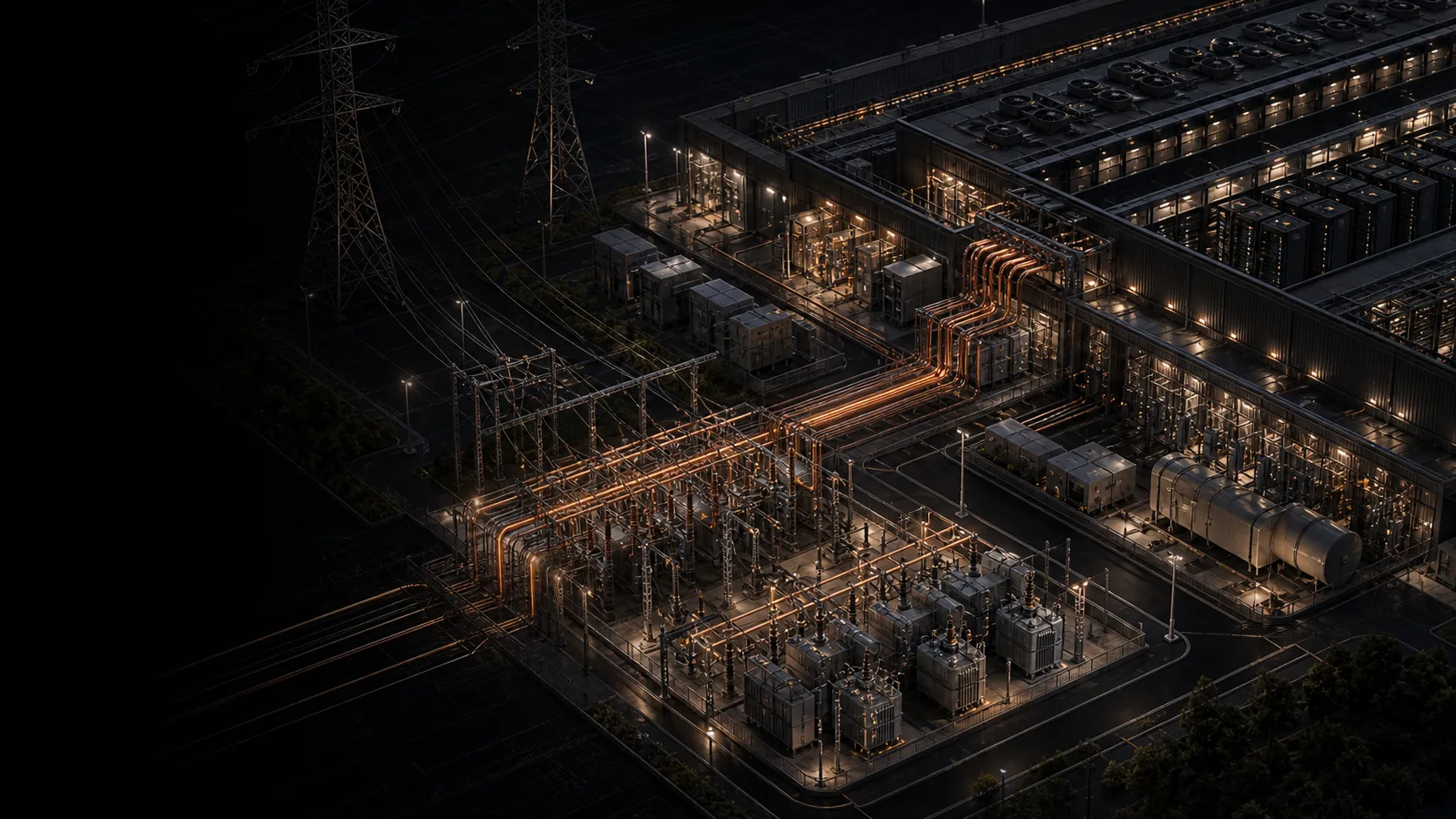
Isometric transformer yard, switchgear and copper busbars connected to a data-center shell.

06 / Shell

Power turns campus spend into revenue.

Racks, cooling, switchgear and transformers

Idle servers sell zero tokens. Transformers, switchgear, cooling and copper decide when purchased compute becomes operating compute.

Follow the money Once the accelerator exists, the building has to receive, cool and distribute power.

A four-year transformer wait can matter more than a chip shipment date because idle servers sell zero tokens.

The chip dollar becomes a construction dollar: racks, switchgear, transformers, cooling and copper decide when compute turns on.

Transformer wait up to ~4 years
AI DC copper avg. ~400kt/year
AI DC copper peak ~572kt in 2028

Are investors counting powered capacity, or just announced campuses?

Market map

  • Schneider ElectricSU.PA Power/cooling systems Power and cooling systems Site equipment: turns racks into energised capacity.
  • VertivVRT Critical infrastructure supplier Critical digital infrastructure Cooling/power gear: captures dense AI rack buildout.
  • EatonETN Switchgear/power management Electrical equipment Electrical distribution: needed before servers earn revenue.
  • ABBABB Electrification equipment Electrification equipment Grid-to-site hardware: captures the physical buildout.

Valuation lens

Announced capacity versus energised capacity

Order books and lead times matter more than one-year earnings when equipment supply is booked out.

Compare transformer and switchgear waits with the promised data-centre delivery dates.

pv magazine · May 2026

Priced-in test

partly priced Medium

Some sites can be built before they can be powered; that makes electrical equipment a real constraint.

Counterpoint: Electrical-equipment stocks have already attracted AI-infrastructure attention, so the easy surprise may be gone.

pv magazine · May 2026
Isometric grid equipment, turbine hall, substations and power pylons.

07 / Power

Power has entered consensus.

Generation, turbines, grid interconnection and SMR optionality

The grid constraint is now widely discussed. The sharper test is which equipment lead time still breaks the buildout schedule.

Follow the money The powered shell still needs generation and grid equipment to arrive on time.

IEA’s 945 TWh by 2030 is slightly more than Japan’s current electricity consumption, pushing power from footnote to main constraint.

The data-centre order becomes a utility, turbine and interconnection order before the racks matter.

Data centers 2024 ~415 TWh
Data centers 2030 ~945 TWh
GE Vernova backlog ~$163B

If power is now consensus, which lead time is still too politely modelled?

Market map

  • GE VernovaGEV $163B backlog Gas turbines / grid Backlog gate: turbine/grid orders reveal duration.
  • Siemens EnergyENR.DE Large turbine/grid peer Turbines and grid Oligopoly peer: supply availability sets build speed.
  • Mitsubishi Power Large gas-turbine supplier Gas turbines Capacity gate: another scarce turbine source.
  • Oklo / SMR developersOKLO Long-duration optionality Future nuclear optionality Future source: narrative value before near-term electrons.

Valuation lens

Backlog and lead-time test

Use backlog, adjusted EBITDA margin and turbine lead times because supply is capacity-booked.

Compare equipment-booking duration with AI campus energisation assumptions.

GE Vernova · Apr 2026

Priced-in test

partly priced Medium

Lead times can slow the AI buildout even if chips are available.

Counterpoint: By 2026, power is closer to consensus than surprise; demand response and behind-the-meter generation can absorb some pressure.

IEA · 2025
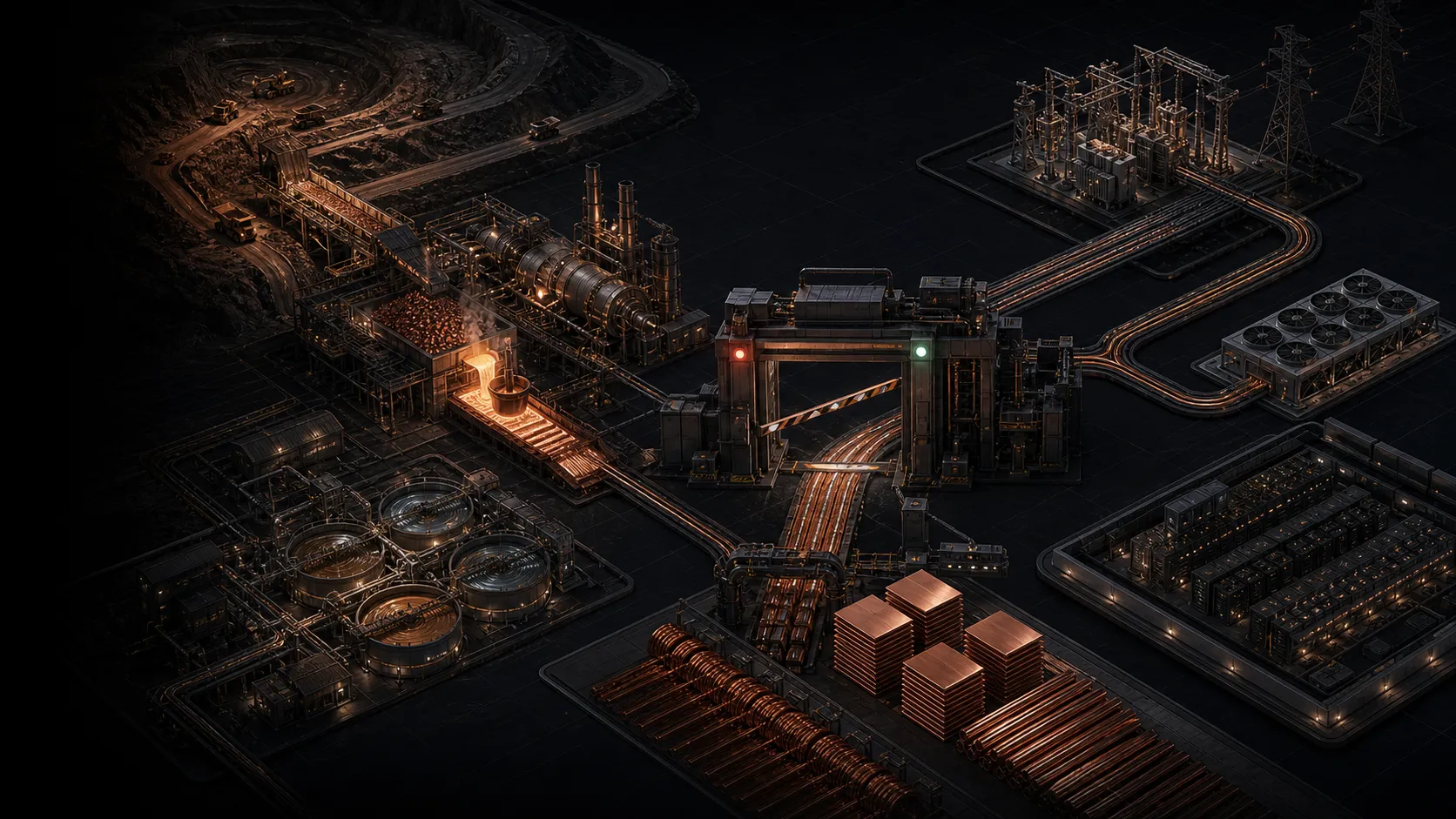
Isometric mineral refinery with ore piles, processing tanks and copper cathodes.

08 / Inputs

The risk is who controls the switch.

Rare earths, gallium, germanium and processing chokepoints

Many critical-material shortages have already forced diversification. The live risk is processing control: who can turn usable supply on or off?

Follow the money Grid hardware, motors, fans, optics and power electronics all need processed minerals.

Mining share is the wrong mental model. Processing control is the switch, and China’s refining and magnet shares are far higher than its share of many raw ores.

The buildout drains into processing capacity: rare earths, gallium, germanium and copper refining decide who turns ore into usable inputs.

China magnets ~94% sintered magnets
China rare earth refining ~91%
China gallium ~90%
China copper refining ~45%

Is the market pricing today’s truce, or the ability to turn export controls back on?

Market map

  • Chinese refiners ~91% rare earth refining Processing chokepoint Processing switch: controls usable output more than mining share.
  • Lynas Rare EarthsLYC.AX Non-China strategic supply Non-China rare-earth producer Diversification path: valuable if processing risk rises.
  • MP MaterialsMP US rare-earth base US rare-earth supply US alternative: strategic supply before full processing independence.
  • Gallium / germanium producers China-dominant specialty inputs Specialty inputs Policy lever: small markets with high electronics consequence.

Valuation lens

Policy switch over static scarcity

Use processing capacity, policy risk and replacement cost before a simple P/E.

Compare processing concentration with the market assumption that truce conditions persist.

IEA · 2025

Priced-in test

open question Medium

Processing concentration is less watched than GPUs and fabs, yet one policy switch can alter the chain.

Counterpoint: Controls are currently paused and substitution/diversification accelerates after every shock.

IEA · Oct 2025
Isometric copper mine, refinery and glowing copper seam under rock.

09 / Copper

Copper is the cleanest variant view.

Copper mining, refining and long-run deficit

Copper works because it has a compare-against number: an above-consensus 2035 price path with a datable demand/supply test.

Follow the money The common input is copper: substations, busbars, cooling, transformers and grid expansion all consume it.

Copper has a real compare-against number: Goldman’s $15,000/t 2035 path is above consensus, while BNEF treats data centres as an added demand wedge.

AI demand joins a slow electrification cycle while refining capacity remains concentrated.

China refining ~45% of copper
AI DC copper avg. ~400kt/year
AI DC copper peak ~572kt in 2028
GS 2035 price $15,000/t

Is the edge the miner, the refiner, or simply a higher long-run copper price deck?

Market map

  • Freeport-McMoRanFCX ~36x TTM P/E cited Copper miner Copper miner proxy: public equity expression of the price deck.
  • Southern CopperSCCO ~31.7x peer P/E cited Copper miner Copper peer: helps compare whether miners already price scarcity.
  • BHPBHP Diversified miner peer Diversified miner Broader miner: copper exposure diluted by other commodities.
  • Chinese smelters ~45% refining share Refining chokepoint Processing gate: the chokepoint after ore leaves the ground.

Valuation lens

Price deck beats slogan

For miners, the key input is the copper price deck. Static current earnings can mislead if the long-run price is wrong.

Goldman’s $15,000/t by 2035 is explicitly above analyst consensus, giving the thesis a real comparison point.

CompaniesMarketCap · Jun 2026

Priced-in test

clearest edge Medium-high

It is specific, datable and below the obvious AI-chip narrative: the chain drains into copper via power, shell and refining.

Counterpoint: The deficit is back-loaded; Goldman also expects near-term copper weakness, making this a long-run price-deck thesis.

Goldman Sachs · Dec 2025

Bottom line

No direct pick. A better question.

The obvious AI trade is the chip. The better question is which physical constraint the market is still treating as background noise. Today, copper has the cleanest comparison: a dated price path above consensus, a refining chokepoint, and a long enough fuse to be ignored.

The chip is the headline. The chain decides the margin.

Your verdict

“The clearest AI-infrastructure question follows the physical layers behind the chip: packaging, power, materials and copper.”

strongly
disagree
strongly
agree

readers have ruled · agree

Open the full map · all 25 layers
maybe mispriced partly priced priced in one event flips it
Demand / capital — the cloud giants

The demand pool is real and splits across many trades: Amazon expects about $200B of 2026 capex; Alphabet guides $180-190B; Meta guides $125-145B; Microsoft disclosed $31.9B in Q3 FY26 capex, roughly two-thirds GPUs/CPUs.

The capex level is visible; the harder question is which lower layer turns it into durable margin.

Captured downstream — Microsoft, Google, Amazon and Meta are the buyers; supplier margin sits below them. DCF

Amazon · Alphabet · Meta · Microsoft

GPUs / accelerators

Nvidia data-center revenue $75.2B (Q1 FY27, Apr 2026 — ~92% of all revenue), ~75% total-company gross margin. (The widely-cited '>80% AI-GPU share' is unverified here.)

Nvidia's dominance is consensus and largely priced; the edge has moved deeper into duration, attach and bottlenecks below the GPU.

Nvidia — the prime value sink of the whole chain. Growth

SEC / Nvidia

What's inside the accelerator

A TSMC logic die + HBM stacks (SK Hynix) + CoWoS packaging + an ABF substrate (Ibiden / Unimicron).

Value splits across TSMC, SK Hynix and the substrate makers — see each layer below. Mixed

Hidden materials beneath the chip

Each input is concentrated, hard to substitute, and barely watched — the chip's true single points of failure.

These are prime candidates for overlooked concentration.

Japanese materials oligopolies + a single North Carolina quartz district. Mixed

Silicon wafers 50%

Shin-Etsu (~29%) and SUMCO (~22%) lead the silicon-wafer market — Japan-dominated, with the two firms around 50% combined (GlobalWafers ~15% is #3), below the often-claimed ~90% figure for the pair.

Shin-Etsu, SUMCO — a Japanese duopoly atop a Japan-heavy field. Cyclical

Wikipedia / market reports

EUV photoresist 80%

Japan ≈80% of the overall photoresist market (TrendForce), led by JSR / Tokyo Ohka / Shin-Etsu; high-end EUV-grade is reportedly even more concentrated (~90%+), with that higher figure coming from trade press.

JSR, Tokyo Ohka Kogyo, Shin-Etsu, Fujifilm. Mixed

TrendForce

Neon gas (lithography laser feedstock) 50%

As of 2022, Ukraine supplied ~50% of world neon and up to ~90% of US imports (DUV laser gas). Supply has since diversified and China is now the largest supplier (2026); the live risk is re-weaponisation of supply.

Ukrainian producers (Ingas, Cryoin) — a wartime single-region supply. Cyclical

USITC

High-purity quartz (crucibles) 80%

Spruce Pine, NC is the world's leading source of high-purity quartz (~80%, BloombergNEF) for the crucibles that hold molten silicon. Synthetic quartz exists at ~5–10× cost, so replacement is possible but expensive.

Sibelco + The Quartz Corp — two operators in one US district. Mixed

Construction Physics

Memory (HBM) — the performance ceiling 60%

SK Hynix ~53–62%, Micron ~21%, Samsung ~17–22% (2025); HBM sold out through 2026; all three certified for HBM4 (Jun 2026).

Less watched than the GPU headline, yet it's a hard ceiling on accelerator performance.

SK Hynix leads; a cyclical-but-tight oligopoly with Micron and Samsung. Cyclical

Astute Group

Fabrication (foundry) 70%

TSMC ~70% of foundry (69.9% FY2025, TrendForce) — and far more dominant at the leading edge: 7nm-and-below ≈74% of its wafer revenue, ~92% of all AI chips; CEO C.C. Wei says advanced-node capacity is ~3× short of demand.

TSMC's lead is known; the geopolitical tail (Taiwan) may be under-priced.

TSMC — the manufacturing chokepoint of advanced logic. Cyclical

Taipei Times / TrendForce

Advanced packaging (CoWoS) 70%

The gating bottleneck is advanced packaging. TSMC CoWoS capacity ~40k/mo (2024) → ~75k/mo (2025), >50% CAGR; effectively sold out into 2026, with utilisation easing to ~60% by Aug 2025 as the ramp caught up. Nvidia >70% of CoWoS-L.

The true near-term ceiling on supply, yet under-watched vs. headline GPU numbers.

TSMC (packaging capacity) — controls how many accelerators can actually ship. Mixed

Fusion Worldwide

Equipment (lithography) 100%

ASML — €32.7B FY2025 sales (verified, primary). It is the sole maker of EUV scanners; the often-cited '~90% of all lithography' and '12–18-month lead times' are third-party figures outside ASML's own filings.

The quiet monopoly: advanced chips depend on it, while public attention sits higher in the stack.

ASML — arguably the deepest moat in the chain (one company, one technology). Growth

ASML

Energy / power

Data-center electricity ~415 TWh (2024, ~1.5% of consumption) → ~945 TWh (2030); on a generation basis ~460 TWh → >1,000 TWh (~1% → ~3% of global). Renewables ~half the growth; gas + coal >40% of the added demand.

The constraint is real and heavily corroborated — but by 2026 it's closer to energy-sector consensus than a mispricing (a 2025 Duke study: the grid could absorb ~76 GW more load with no new plants if data centres flex ~22 h/yr).

Power producers, the grid, and gas-turbine / SMR makers — the emerging hard ceiling on the buildout. Asset / NAV

IEA

Making the electricity (the binding constraint)

The buildout jams where equipment shipping speed limits generation installs.

GE Vernova / Siemens Energy / Mitsubishi (turbines); the grid operators. Mixed

Gas turbines

GE Vernova: $163B total backlog (new orders +71% YoY), ~10% adjusted-EBITDA margin (Q1 2026) — valued on EBITDA + backlog before the one-off-distorted net margin. Large-turbine waits up to ~7 years; GE / Siemens / Mitsubishi booked toward ~2030.

GE Vernova, Siemens Energy, Mitsubishi Power — an effective oligopoly with pricing power. EBITDA

GE Vernova

Grid interconnection

Interconnection queue ~2,600 GW (median ~5-yr wait; 7–10 yrs in hotspots); transmission 4–8 yrs to build. Gartner: power shortages constrain 40% of existing AI DCs by 2027.

Utilities + transmission owners (regulated, asset-based). Asset / NAV

Gartner

Nuclear / SMR

>40 GW of SMR capacity is being positioned for cloud giants / industrial users (FTI, 2025) — Amazon ~5 GW, Meta ~6.6 GW, Oklo+Switch ~12 GW — but deployment timelines are long; first SMRs ~2030.

SMR developers + utilities — mostly future optionality. Asset / NAV

FTI Consulting

Power delivery & the physical shell

Even with power, you need to move it: transformers, switchgear, busbars — and a lot of copper.

Transformer makers (tight supply) + the copper chain (see Fundamental inputs). Mixed

Power transformers

Lead times up to ~210 weeks (~4 years) for large units; transformer wait times have roughly doubled in three years.

A handful of large-transformer makers — supply-constrained, pricing power. EBITDA

pv magazine

Copper in the build

AI data centers are a fast-growing copper sink: ~400kt/yr average this decade, peaking ~572kt in 2028 (BloombergNEF); Macquarie ~330–420kt by 2030. Per-MW intensity is contested: the common '25–30 t/MW' is weakly sourced; Schneider's 66 t/MW is a 10-year lifecycle figure.

Flows down to the copper supply chain — see Fundamental inputs → Copper. Cyclical

BloombergNEF

Fundamental inputs — copper & rare earths 90%

China refines ~91% of rare earths / ~94% of magnets and ~45% of copper (mining far less). Export controls toggled through 2025; heavy rare earths suspended Nov 2025 under the US-China truce.

The sharper variant-perception edge: most material figures are time-stamped baselines that diversified after their disruptions, so the live risk is re-weaponisation through China's Dec-2024 export-ban precedent.

Miners and refiners — heavily China-concentrated on the refining (processing) side. Cyclical

IEA

Copper 45%

China mines ~8% of copper and refines ~45% — and added ~97% of global smelting/refining capacity additions since 2019. IEA STEPS: ~30% economy-wide supply shortfall by 2035 (announced mines cover ~70% of demand) — driven by grids + electrification, with AI data centres an accelerant.

The clearest mispriced candidate: Goldman's $15,000/t-by-2035 is explicitly above analyst consensus. But it's back-loaded (demand overtakes supply ~2029) and the near-term balance is contested.

Mining majors upstream; China dominates refining — processing is the real chokepoint. Cyclical

Wood Mackenzie · Goldman Sachs

Rare-earth magnets 91%

NdFeB magnets (Nd/Pr + heavy Dy/Tb) sit in server fans, motors, HDDs and defense; China ~91% of refining and ~94% of sintered magnets (IEA, Oct 2025). Heavy-RE (Dy/Tb) export licensing (Apr→Oct 2025) was suspended ~Nov 2025 for ~1 year under the US-China truce, leaving re-weaponisation as the live risk.

Chinese refiners — near-total control of the processing step. Cyclical

IEA

Gallium / germanium / graphite

China-dominant (~90% gallium, ~60% germanium, 2022) in these compound-semi and optics inputs; controls toggled — Jul-2023 halt → Dec-2024 US ban → Nov-2025 partial pause under the truce; levers retained.

Chinese producers — used as an export-control lever. Cyclical

USITC

Networking / optics

Nvidia networking revenue $14.8B (Q1 FY27, +199% YoY, +35% QoQ) — InfiniBand, Spectrum-X Ethernet and NVLink; the interconnect that ties accelerators into clusters.

Nvidia (NVLink / Spectrum-X) + optical-component suppliers. Growth

Nvidia

Sources (23)

25 layers · bar = how concentrated · as of 2026-06-13